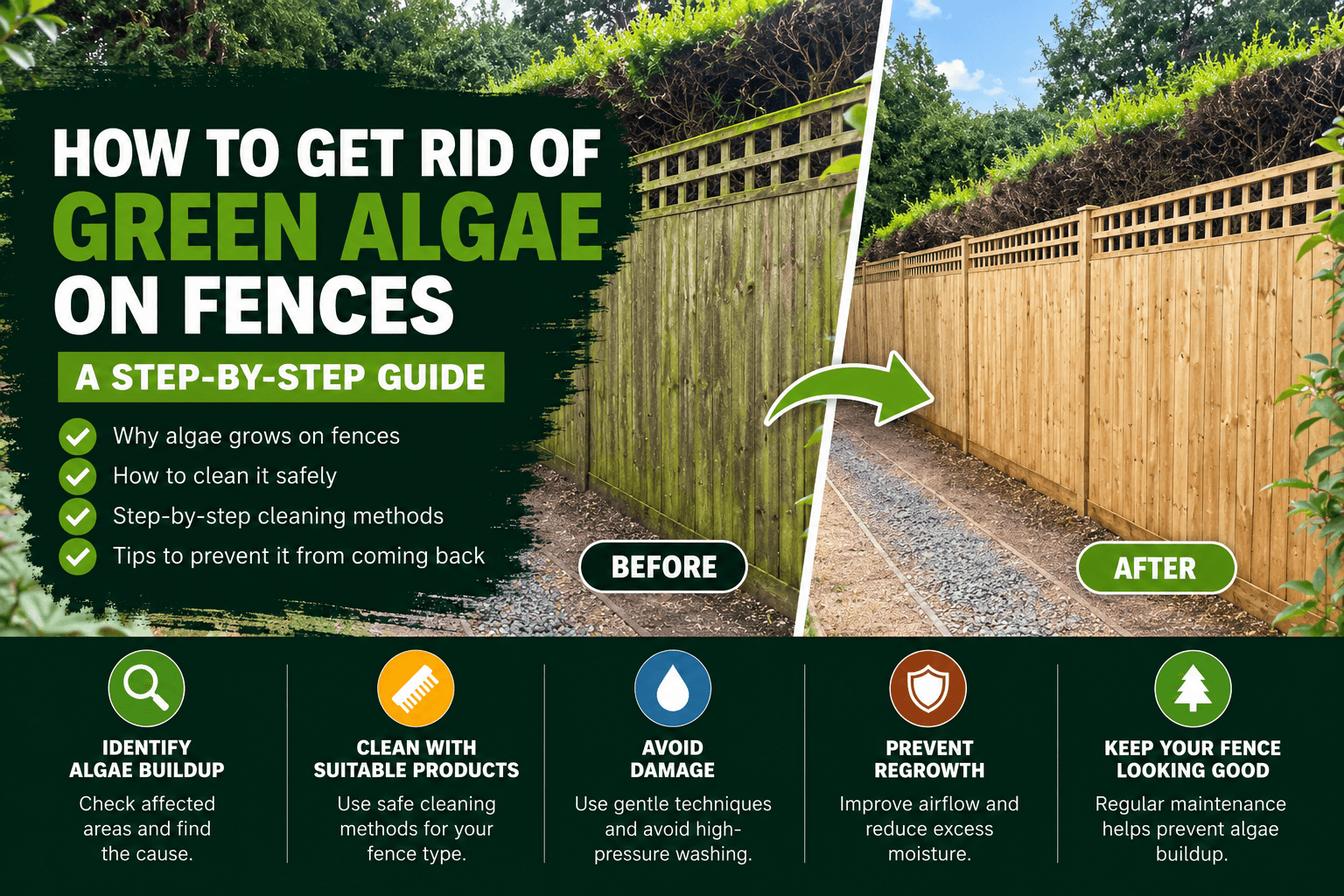
Green algae on garden fences is a common problem for UK homeowners, especially in damp and shaded areas. Small green patches can gradually spread across timber panels, making your fence look dirty and poorly maintained. If left untreated, persistent moisture can also contribute to timber deterioration, affecting the fence’s appearance and lifespan.
The good news is that green algae can usually be removed without replacing your fence. However, the right cleaning approach depends on the fencing material, the extent of algae growth and the condition of the surface.
To help you tackle the problem safely, William Bradley Fencing, a residential fencing specialist serving Surrey and nearby areas, shares practical cleaning advice, safe algae removal techniques and preventive maintenance tips to keep your garden fence in good condition.
Key Takeaways
|
Why Do Garden Fences Turn Green?
Garden fences turn green mainly because algae grows on surfaces that remain damp for long periods. In the UK, frequent rainfall, limited sunlight and poor airflow create favourable conditions for green algae to develop, particularly on wooden fence panels.
Several factors can encourage algae growth on garden fencing:
- Excess Moisture: Frequent rainfall, high humidity and slow-drying surfaces create damp conditions that encourage algae growth.
- Shaded Areas: Fences positioned behind buildings, trees or tall hedges receive less sunlight, keeping the timber damp for longer.
- Poor Air Circulation: Dense vegetation and restricted airflow prevent moisture from drying quickly.
- Nearby Plants and Soil: Overgrown plants, damp soil and water splashing onto fence panels can increase moisture exposure.
- Lack of Regular Maintenance: Dirt, fallen leaves and organic debris can trap moisture against the fence, encouraging algae to spread.
William Bradley Fencing Tip: If algae keeps returning, check for soil against timber panels, standing water around posts and damaged gravel boards. Trapped moisture can lead to timber decay.
What Do You Need to Remove Green Algae From a Fence?
To remove green algae from a fence safely, you only need a few basic cleaning tools and a suitable cleaning solution, including a soft-bristled brush, warm water, mild detergent or fence algae remover, a sponge, a garden hose and protective gloves.
- Soft or Medium-Bristled Brush: To scrub away algae without scratching or damaging the timber surface.
- Bucket of Warm Water: For mixing the cleaning solution and washing affected areas.
- Mild Detergent or Fence Algae Remover: To loosen and remove green algae from wooden fence panels.
- Sponge or Soft Cloth: For cleaning corners, edges and delicate sections of the fence.
- Garden Hose: To rinse away loosened algae and cleaning residue using gentle water pressure.
- Protective Gloves and Safety Glasses: To protect your skin and eyes when handling cleaning products.
- Plastic Sheeting: To protect nearby plants and surfaces from splashes, following the cleaning product’s safety instructions.
William Suggestion: Avoid wire brushes, harsh chemicals and high-pressure washing, as these can damage wooden fence panels. Always test your cleaning solution on a small, hidden area before cleaning the entire fence.
How to Get Rid of Green Algae on Fences: Step-by-Step
To remove green algae from a garden fence, gently scrub the affected areas with a soft-bristled brush, warm water and a suitable fence-cleaning solution. Rinse away the loosened algae and allow the fence to dry completely. For timber fencing, avoid harsh chemicals and excessive pressure that could damage the wood.
Step 1: Clear the Area Around Your Fence
Move garden furniture, plant pots and other items away from the fence. Trim back any overgrown plants that restrict access or trap moisture against the panels.
Protect nearby plants and flower beds from cleaning solutions, particularly if you are using a specialist algae remover.
Step 2: Remove Loose Dirt and Surface Algae
Use a soft-bristled brush to remove loose dirt, leaves and surface algae. Work gently along the timber grain rather than scrubbing aggressively.
Pay particular attention to shaded areas, panel joints and the bottom of the fence, where moisture tends to collect.
Step 3: Apply a Suitable Fence-Cleaning Solution
Apply a cleaning solution suitable for your fencing material. For light algae growth, warm water with a small amount of mild washing-up liquid may help remove surface deposits.
For more stubborn green algae, use a specialist outdoor algae remover labelled as suitable for timber fencing. Follow the manufacturer’s instructions for dilution, application and contact time.
Avoid household bleach and strong chemical cleaners that could discolour or damage the timber.
Step 4: Gently Scrub the Affected Areas
Use a soft brush or non-abrasive sponge to loosen the green algae. Work in small sections, applying gentle pressure to avoid damaging the timber surface.
If algae remains, repeat the cleaning process rather than using a wire brush or scraping tool.
Step 5: Rinse the Fence Thoroughly
If the cleaning product requires rinsing, use a garden hose with a gentle flow of water to wash away loosened algae and cleaning residue.
For timber fencing, gentle brushing and rinsing are generally safer than pressure washing. Even low pressure can damage older or weathered wood, so only consider pressure washing if the timber is sound and the manufacturer’s guidance allows it.
Step 6: Allow the Fence to Dry Completely
Leave the fence to dry naturally before applying any protective treatment. Drying time depends on the weather, sunlight and airflow around your garden.
Installer’s Tip: Check the bottom of timber panels for soft or crumbling wood, which may indicate rot. Cleaning or protective treatments cannot restore weakened timber.
What Is the Best Way to Remove Green Algae From a Fence?
The most suitable algae removal method depends on the fencing material, the severity of the buildup and the condition of the surface. Light surface growth generally needs less intensive treatment, while stubborn algae may require a specialist cleaning product. Older or weathered fencing needs extra care to avoid damage during cleaning.
The table below compares common cleaning methods and their precautions.
| Cleaning Method | Best For | Precautions |
|---|---|---|
| Soapy Water and Soft Brush | Light algae buildup | Avoid excessive scrubbing |
| Diluted White Vinegar | Small affected areas | Check timber finish compatibility and protect nearby plants |
| Specialist Algae Remover | Stubborn or widespread algae | Choose a fence-safe product and follow label instructions |
| Low-Pressure Washing | Sound, robust timber | Use low pressure to avoid damaging wood fibres |
How Do You Remove Green Algae from Different Types of Fencing?
The best way to remove green algae from different types of garden fencing depends on the material and its condition. Wooden fences require gentle cleaning to protect the timber, while composite and metal fencing may need different cleaning methods. Always use a cleaning solution suitable for your fencing material and follow the manufacturer’s care instructions.
| Fencing Type | Recommended Cleaning Method | Precautions |
|---|---|---|
| Wooden Fencing | Use warm soapy water and a soft-bristled brush to gently remove algae. | Avoid harsh chemicals, abrasive brushes and high-pressure washing. |
| Composite Fencing | Clean with mild detergent, warm water and a soft cloth or brush. | Avoid abrasive cleaners and check the manufacturer’s cleaning guidelines. |
| Metal Fencing | Wash with mild soapy water and a soft sponge or non-abrasive brush. | Avoid products that could damage protective coatings or cause corrosion. |
| Painted or Stained Fencing | Gently clean with a mild solution and a soft sponge. | Test a hidden area first to avoid removing paint or protective finishes. |
Can You Pressure Wash Green Algae Off a Fence?
Pressure washing can remove green algae from some fences, but it is not usually the safest option for timber. Gentle brushing is generally recommended, especially for older or weathered panels. Only consider pressure washing if the wood is in good condition and the manufacturer’s instructions permit it.
If pressure washing is suitable for your fence, follow these precautions:
- Check the Timber Condition: Avoid pressure washing rotten, cracked, splintered or weakened panels.
- Use Low Pressure: Start with the lowest suitable setting, following the manufacturer’s recommendations.
- Choose a Wide Spray Nozzle: Avoid narrow, concentrated jets that could damage wood fibres.
- Maintain a Safe Distance: Keep the nozzle away from the surface and test a small, hidden area first.
- Avoid Prolonged Spraying: Keep the spray moving rather than directing water at one spot or into panel joints.
How Do You Stop Green Algae From Growing Back on Fences?
To stop green algae from growing back on fences, reduce moisture buildup, improve airflow and maintain the fence regularly.
- Trim Back Overgrown Plants: Cut back hedges, climbing plants and shrubs touching the fence to improve airflow and allow the timber to dry faster after rainfall.
- Improve Drainage Around the Fence: Prevent standing water and avoid piling soil or mulch against the bottom of wooden panels, where trapped moisture can encourage algae growth and timber decay.
- Remove Leaves and Debris Regularly: Clear fallen leaves, dirt and other organic material that can hold moisture against the fence surface.
- Apply a Suitable Timber Treatment: Once the fence is clean and completely dry, consider applying an exterior wood preservative or protective stain suitable for your fencing material.
- Inspect and Clean Your Fence Periodically: Check shaded and damp sections for early signs of green algae. Removing small patches before they spread makes ongoing maintenance easier.
When Is Cleaning Not Enough for a Green Fence?
Cleaning is not enough when green algae is accompanied by signs of rot, structural damage or persistent moisture problems.
- Soft or Rotten Wood: Fence panels that feel spongy, crumble or break apart may be affected by rot and require replacement.
- Cracked or Splitting Panels: Deep cracks and splits can allow moisture to penetrate the wood, causing further deterioration.
- Loose or Leaning Fence Posts: Unstable posts may indicate decay or problems below ground that cleaning cannot resolve.
- Peeling or Damaged Protective Coatings: Worn paint or stain can leave wooden fences exposed to moisture and may require retreatment.
- Repeated Algae Growth: Green patches that return quickly may indicate ongoing drainage problems, poor airflow or excessive shade.
If the fence remains structurally sound, cleaning and applying a suitable protective treatment may be enough. However, rotten panels, weakened posts, or extensive damage may require professional fence repairs to restore the boundary’s stability and condition.
Conclusion
Green algae on a garden fence is usually a surface-level problem rather than a sign that the fence needs replacing. However, if algae keeps returning or the timber shows signs of deterioration, it is worth checking for underlying moisture problems. Addressing these early can help prevent more serious damage and unnecessary replacement costs.
At William Bradley Fencing, we have over 10 years of experience installing and repairing residential fencing across Surrey and nearby areas. Whether your fence needs repairs or a complete replacement, our team can assess its condition and recommend a suitable solution. Contact us for expert advice and a free, no-obligation quote.
FAQS
Can you paint or stain a fence after removing green algae?
Yes, you can paint or stain a fence after removing green algae, but the timber must be clean and completely dry first. Remove any remaining algae or cleaning residue, then apply a suitable exterior wood paint or stain according to the manufacturer’s instructions.
How often should you clean green algae off a garden fence?
You should clean green algae off a garden fence whenever it starts to appear, typically once or twice a year. Fences in damp or shaded areas may need more frequent cleaning. Regular inspections and maintenance help prevent algae buildup and keep the timber in good condition.
Will green algae eventually disappear from a fence on its own?
Green algae may dry out or fade during warmer, sunnier weather, but it is unlikely to disappear completely on its own. Cleaning the affected areas and reducing excess moisture helps remove existing algae and prevent it from returning.
Can green algae spread from one fence panel to another?
Yes, green algae can spread from one fence panel to another, particularly in damp and shaded conditions. Algae spores can travel through air and water, allowing new growth to develop on nearby panels. Regular cleaning and improved airflow can help reduce its spread.
How long does it take to remove green algae from a fence?
Removing green algae from a fence typically takes 30 minutes to a few hours, depending on the fence size, algae buildup and cleaning method. Light algae can be removed quickly with soapy water and brushing, while stubborn growth may require additional treatment.
Do you need to replace a fence covered in green algae?
No, you do not need to replace a fence simply because it is covered in green algae. Algae is usually a surface-level problem that can be removed with suitable cleaning methods. However, if the fence has extensive rot, weakened posts or structural damage, repairs or replacement may be necessary.
What causes algae buildup on garden fences?
Algae buildup on garden fences is mainly caused by excess moisture, limited sunlight and poor airflow. Frequent rainfall, shaded areas, overgrown vegetation and trapped dirt create damp conditions that encourage green algae to grow, particularly on wooden fence panels.