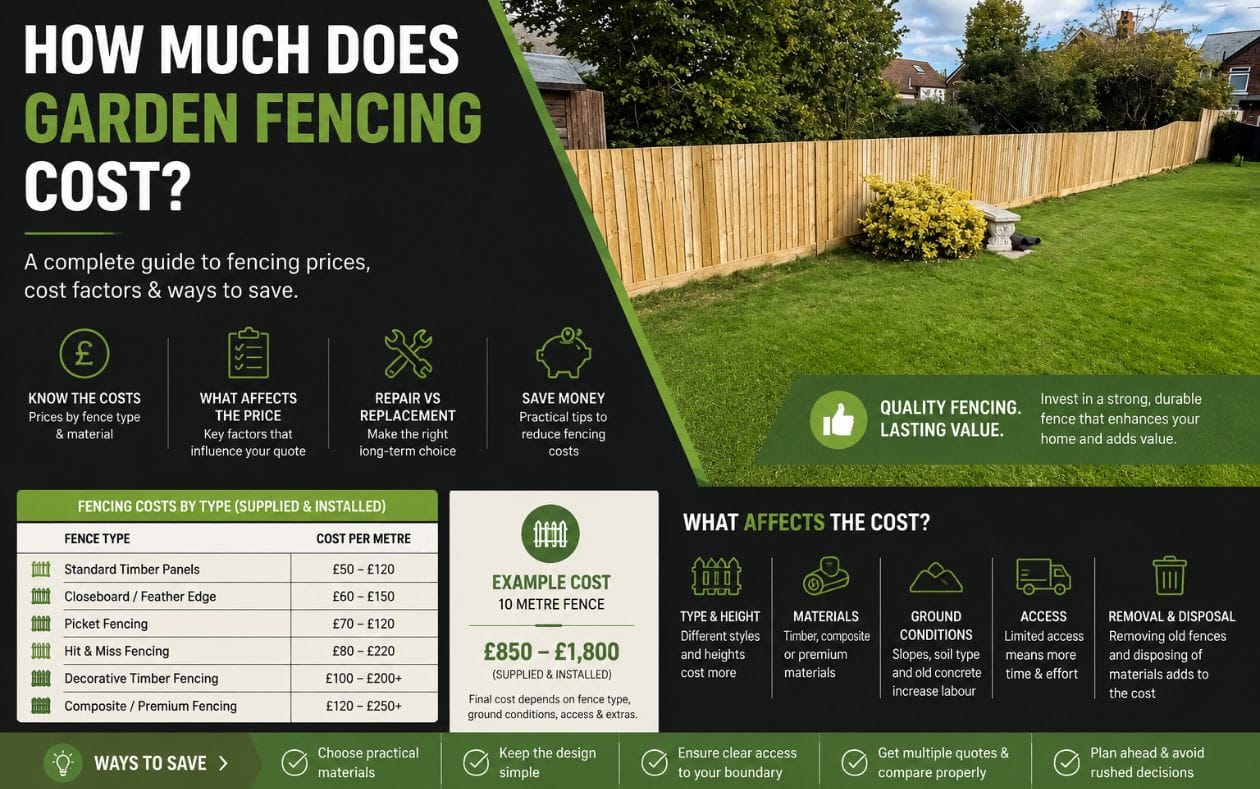
Planning a new garden fence often starts with one important question: how much does garden fencing cost? For many homeowners, setting a realistic budget can be difficult because garden fencing costs vary depending on the fence type, boundary size, materials, and the work required for installation.
This is where budgeting can get tricky. Two gardens may need the same amount of fencing but end up costing very different amounts to complete.
Access, uneven ground, old concrete and an overgrown boundary can all add to the work. Removing and disposing of your existing fence may also need to be included.
We install garden fencing across Surrey and see these differences from one job to the next. Some boundaries are ready for new fencing; others need a fair amount of preparation before installation can begin.
In this guide, we’ll break down garden fencing costs, what affects the price, removal and replacement costs, DIY vs professional installation, and ways to get the best value from your budget.
Key Takeaways
|
What is the Average Cost of Garden Fencing?
The average cost of professionally installed garden fencing is typically around £85–£180 per linear metre, including materials and labour. For a typical 15-metre garden boundary, this gives a broad starting budget of approximately £1,275–£2,700 before allowing for extras such as removing an old fence, gates or more difficult ground conditions.
The final cost depends on the type and height of fencing, the posts and gravel boards used, garden access, ground conditions and the amount of preparation needed. Two boundaries of the same length can therefore have noticeably different installation costs.
Garden Fencing Costs by Type and Material
The type of garden fencing you choose directly affects the cost. Standard timber fence panels are usually more affordable, whereas decorative, hit-and-miss, and premium fencing typically cost more
| Fence type | Estimated cost per metre | Best suited to |
|---|---|---|
| Closeboard / feather edge | £60–£150 | Strong boundary fencing, privacy, and exposed gardens |
| Standard timber fence panels | £50–£120 | Affordable garden boundaries and privacy |
| Picket fencing | £70–£120 | Front gardens and decorative boundaries |
| Hit-and-miss fencing | £80–£220 | Contemporary gardens, airflow, and attractive boundaries |
| Decorative timber fencing | £100–£200+ | Feature boundaries and gardens where appearance is a priority |
| Premium hardwood / composite fencing | £165–£265+ | High-end gardens and homeowners prioritising appearance or lower maintenance |
| Composite fencing | £120–£250+ | Low-maintenance, modern garden boundaries |
Notes: This is an illustrative budgeting example rather than a William Bradley Fencing quotation. The actual cost will depend on the individual boundary, fencing specification, and preparation required.
Expert Tip from William: Use online prices, per-metre rates and example costs as a starting point for your budget. Every garden is different, so we recommend assessing the boundary, access and fencing specification before confirming the final cost.
What Factors Affect Garden Fencing Costs?
The main factors that affect garden fencing costs are the fence type, materials, boundary size, posts and gravel boards, ground conditions, garden access and the amount of preparation required. Labour costs can also increase when an installation is more difficult or takes longer to complete.
1. Fence Type and Materials
Timber, closeboard, picket and composite fencing have different materials and installation requirements. The quality and specification you choose can therefore make a noticeable difference to the overall cost.
2. Length and Height of the Fence
Longer or taller fences require more materials, posts and installation time, increasing the overall cost. Depending on the fence height and location, planning permission may also be required, so check the rules before installation.
3. Timber or Concrete Posts
Your choice of fence posts can affect both the initial cost and long-term durability. Concrete posts generally cost more and require more work to install, whereas timber posts can offer a more traditional finish at a lower initial cost.
4. Gravel Boards
Adding gravel boards increases the initial cost but helps keep timber fence panels away from direct contact with the ground. You can usually choose between timber and concrete gravel boards depending on the fencing system and the look you prefer.
5. Ground Conditions
Hard or uneven ground, tree roots and existing concrete around old posts can make preparing and installing a new fence more labour-intensive.
6. Removing the Existing Fence
If an old or damaged fence needs dismantling before work can begin, the cost may include additional labour and responsible disposal of the old materials.
7. Gates and Additional Features
Garden gates, including a traditional timber or composite gate, along with decorative trellis and other finishing details, should also be included in your budget. These additions may only cover a small section of the boundary, but they require extra materials and installation time.
Expert Tip from William: The cheapest quote isn’t always the best value. Make sure it reflects your garden conditions and clearly includes the materials and installation needed for a strong, long-lasting fence.
How Much Does It Cost to Remove and Replace an Old Fence?
Removing an old fence usually costs £20–£30 per metre, plus the cost of a new fence and installation. For a complete replacement, you could expect to pay roughly £85–£180 per metre for typical garden fencing, depending on the materials, ground conditions and work involved.
| Fence Work | Typical Budgeting Range | What Affects the Cost? |
|---|---|---|
| Remove and dispose of old fence | £20–£30 per metre | Fence type, amount of waste and garden access |
| Remove concrete-set fence post | £50–£100 per post | Post depth, concrete foundations and access |
| New timber fencing supplied and installed | £85–£180 per metre | Fence style, height, posts, gravel boards and ground conditions |
| Replacement timber post installed | £100–£150 per post | Post size, ground conditions and existing concrete |
| Replacement fence panel installed | £100–£150 per bay | Panel type, size and condition of existing posts |
Note: These figures are general budgeting ranges and are not fixed William Bradley Fencing prices. Removal and replacement costs can vary depending on the existing fence, concrete around old posts, waste volumes, ground conditions and the specification of the new fencing.
How Much Does DIY Fence Installation Cost?
DIY fence installation in the UK typically costs around £40–£100 per metre for materials, depending on the fencing type, height and specification. You can save on professional labour, but you still need to budget for posts, gravel boards, concrete, fixings, tools and waste disposal.
| DIY Material | Typical Budgeting Price |
|---|---|
| Timber fence panel | £30–£70 each |
| Timber fence post | £15–£30 each |
| Concrete fence post | £25–£45 each |
| Gravel board | £15–£35 each |
| Post concrete | £6–£10 per bag |
| Fixings and fittings | £20–£50+ |
| Tool hire | £40–£100+ per day |
From our experience, DIY fencing can save on labour, but remember to budget for materials, tools, delivery and waste disposal. Once these are included, the overall saving may be smaller than expected.
DIY vs Professional Fence Installation Costs
The main difference between DIY and professional fence installation is labour cost, time and installation experience. DIY can save on labour, whereas professional installation gives you an experienced installer who can assess the ground, set the posts correctly and deal with problems that appear during installation.
| Cost Factor | DIY Installation | Professional Installation |
|---|---|---|
| Labour | No labour charge | Included in the quote |
| Materials | You buy and arrange materials | Usually supplied as part of the job |
| Tools | May need to buy tools | Professional tools included |
| Waste removal | You arrange disposal | May be included in the quote |
| Installation time | Usually takes longer | Generally completed faster |
| Unexpected problems | You deal with them yourself | An experienced installer can assess and manage them |
What Should Be Included in a Garden Fencing Cost Quote?
A garden fencing quote should clearly show what materials, installation work and additional services are included in the total cost. This makes it easier to compare quotes accurately and reduces the chance of unexpected costs once the project begins.
- Fencing materials: The type, height and quantity of fencing required.
- Posts and gravel boards: Including whether timber or concrete products are being used.
- Labour: The cost of installing the fence.
- Ground preparation: Any necessary digging or preparation before installation.
- Old fence removal: If existing fencing needs to be taken down.
- Waste disposal: Removal of old panels, posts, concrete and installation waste.
- Gates and fittings: Gates, hinges, latches and other hardware where required.
- Delivery: Any charges for getting materials to the property.
- VAT: The quote should make clear whether VAT applies and is included.
Expert Tip from William: Don’t judge a fencing quote by the final price. Check exactly what materials and installation work are included so you can compare quotes properly. If you’re unsure what your project will involve, contact William Bradley Fencing for a quote based on your garden and fencing requirements.
How Can You Reduce Garden Fencing Costs Without Compromising Quality?
You can reduce garden fencing costs by choosing practical materials, keeping the design simple and only replacing what is necessary.
- Choose the Right Fencing Material: Select a fence based on the level of privacy, durability and maintenance your garden requires rather than paying for features you do not need.
- Keep the Design Practical: Standard fence sizes and simpler boundary layouts can reduce the need for bespoke materials and additional installation work.
- Reuse Suitable Existing Components: If some posts, gravel boards or sections remain structurally sound, ask whether they can be retained rather than automatically replacing everything.
- Consider Long-Term Maintenance: A cheaper fence may require more frequent treatment or repairs, so compare ongoing maintenance and expected lifespan alongside the initial cost.
- Prepare the Garden for Access: Clearing plants, furniture, and other obstacles from the working area can make it easier for installers to access the boundary.
- Get a Detailed Fencing Quote: Make sure materials, installation, removal and any additional work are clearly specified so you can compare the overall value.
How Do You Choose the Right Fencing Company for Your Budget?
To choose the right fencing company for your budget, compare the quality of materials, installation experience and what is included in each quote.
- Proven Fencing Experience: An experienced installer can assess your boundary and recommend an appropriate fencing solution.
- Quality Materials: Check the type and specification of the fencing, posts and other components included in the quote.
- Practical Advice: The contractor should explain the available options and help you choose a fence that meets your needs without adding unnecessary features.
- Examples of Completed Work: Previous projects can give you a good idea of a company’s workmanship, attention to detail and experience. You can view our previous fencing projects to see examples of our completed work.
- Genuine Customer Reviews: Feedback from previous customers can provide useful insight into workmanship, reliability and service.
Conclusion
Garden fencing costs in Surrey depend on the type of fence, boundary length, materials, access and preparation required. There is no single price that suits every garden, which is why an on-site assessment is the best way to get an accurate quote.
At William Bradley Fencing, we have over 10 years of experience installing garden fencing across Surrey and can help you choose an option that suits your property, needs and budget. We’ll assess your boundary, talk through the available fencing options and explain the work involved before providing a quote.
If you’re planning a new or replacement fence, contact William Bradley Fencing for a garden fencing quote in Surrey and practical advice on the right option for your garden.
FAQs
Is it cheaper to repair or replace a garden fence?
Repairing a garden fence is usually cheaper if the damage is limited to a few panels, posts or fixings. However, if the fence is old, unstable or damaged across several sections, replacing it may offer better long-term value.
How can you estimate the cost of a new garden fence?
To estimate your garden fencing cost, measure the boundary length and multiply it by the estimated installed cost per metre for your chosen fence. Then add any extra costs, such as gates or removing existing fencing. For example, a 12-metre boundary at £100 per metre would cost around £1,200 before any additional work.
Is a more expensive garden fence worth the cost?
A more expensive garden fence can be worth the cost if it offers better durability, lower maintenance and a longer lifespan. The best value depends on your budget, garden conditions and how long you expect the fence to last.
What is the cheapest type of garden fencing?
Basic timber fence panels are usually one of the cheapest garden fencing options in the UK. However, the total cost also depends on the posts, gravel boards, installation and preparation your boundary requires.
Does garden fencing cost more if the old fence needs removing?
Yes. Removing and disposing of an existing fence adds labour and waste costs, particularly where old posts are set in concrete or garden access is restricted. Ask whether removal and disposal are included when comparing fencing quotes.
Is low-cost garden fencing durable?
Yes, low-cost garden fencing can be durable if it is made from suitable materials and installed correctly. Regular maintenance and timely repairs can also help extend its lifespan.